
The International Longshore and Warehouse Union Local 5 (ILWU)
The union president is usually the individual who leads negotiations on behalf of the union. The President of the ILWU is Ryan Van Winkle. Union members do not get to vote on who leads negotiations.
ILWU Local 5 LM2 Report 2025
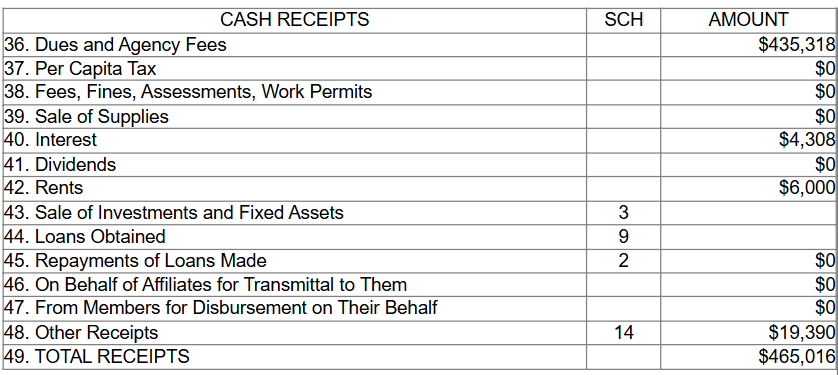
Every year unions are required to file financial reports with the U.S. Department of Labor. These reports show all the money a union collected in a particular year, including the source of the income. Reports also show where the ILWU Local 5 spent the money it collected.
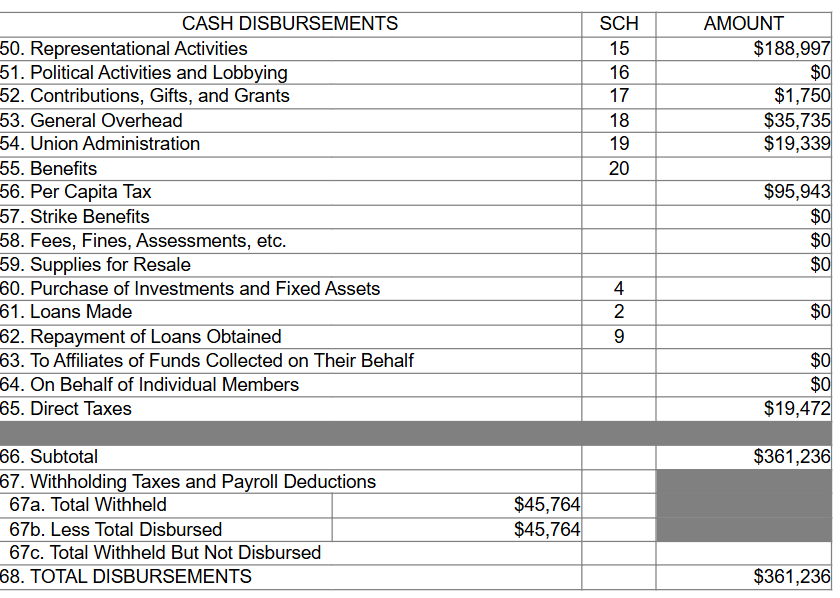
Where does ILWU Local 5 spend its money?
Found on the ILWU Local 5 LM2, Fiscal Year 2025 [Insert LM2 Link] Report: STATEMENT B - RECEIPTS AND DISBURSEMENTS
$188,997 Representational Activities – Money spent attempting to organize non-union workers
$95,943 Per Capita Tax - A tax paid on behalf of every member of Local 5 to the International Shoreman and Warehouse Union
$35,735 General Overhead - There is no specific definition of this term. It could include various general costs of operating the union and maintaining its physical assets
$19,339 Union Administration - Money spent on internal affairs
$0 Individual Members - Money that the local disburses to its members
ILWU NLRB Representation Election Track Record
How has the ILWU fared in NLRB representation elections in first contract negotiations?
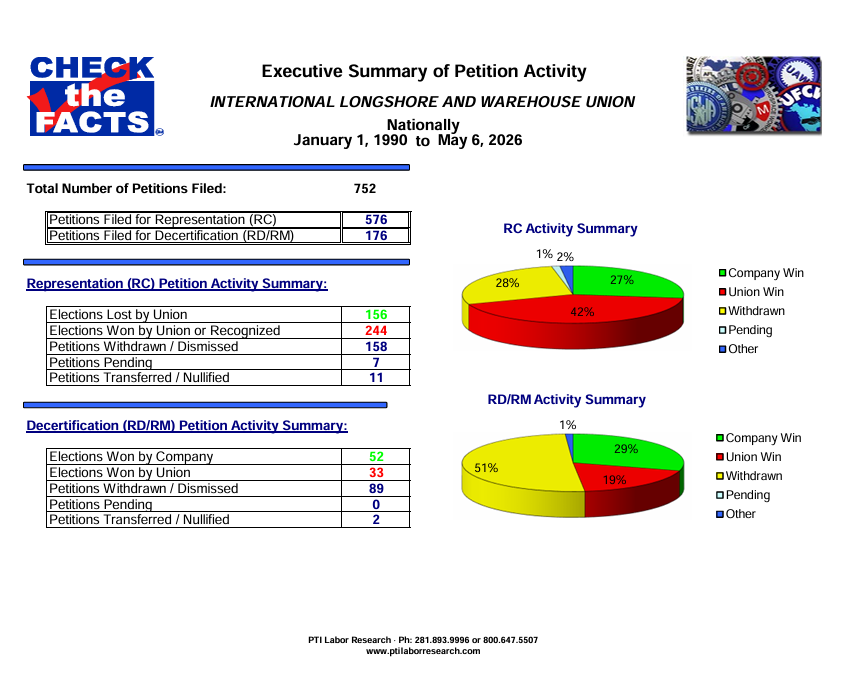
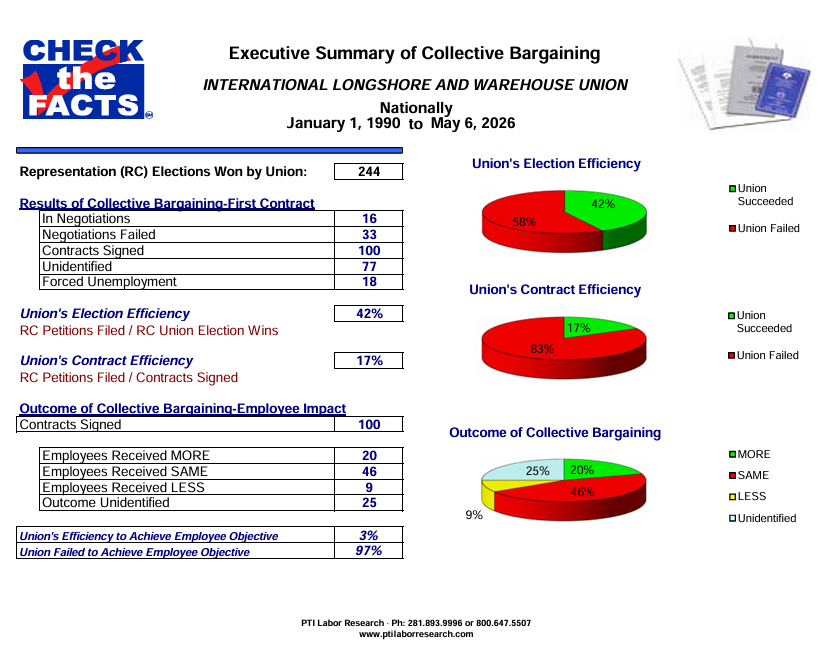
Since January 1990, there have been 576 representation petitions filed with the NLRB.
Out of the 576 representation petitions filed, here are the results:
Won 244 elections (42%)
Withdrew 158 prior to the vote (28%)
Lost 156 elections (27%)
Pending 7 election (The Children’s Garden being one of these)
Unions typically withdraw a petition if they feel they are going to lose an election.
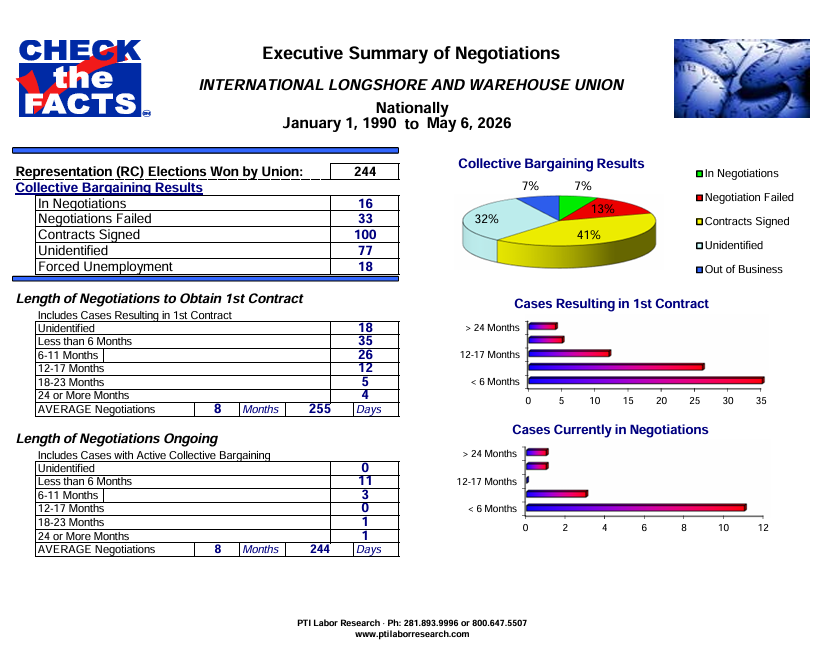
Of those 244 wins, the ILWU was able to reach a contract on 100 occasions.
And out of the 100 contracts signed, employees got more in wages and benefits than what they had prior to unionization just 20 times.
That is an overall success rate of 3%. Below is information from an independent research firm reflecting these results.
ILWU Constitution
All unions, including ILWU, have an International Constitution that contains the rights and powers of union officials, as well as rules and obligations all members must follow. According to the ILWU Constitution:
Membership Obligations / Pledge: ILWU members are required to accept and adhere to the Constitution and Bylaws of the International Longshore and Warehouse Union, which govern member conduct and union operations. Members are expected to understand and follow these governing documents. (ILWU Constitution, Article VIII – Membership and Duties)
Adherence to Union Rules: Members are required to comply with union rules, policies, and decisions adopted by the union’s governing bodies. Failure to follow these rules may limit individual flexibility regarding workplace matters covered by collective agreements. (Article VIII)
Disciplinary Action: The ILWU Constitution contains provisions for internal charges, trials, fines, suspension, or expulsion of members who are alleged to violate the Constitution or union rules. These matters are handled through union controlled disciplinary procedures. (Articles VIII and X – Charges, Trials, and Appeals)
Strike Authorization and Participation: The Constitution authorizes the union to engage in strikes, boycotts, or other concerted activity when approved under union procedures. Members may be expected to honor authorized strike directives, which can result in a loss of pay during a strike. (Article IX – Strikes, Lockouts, Boycotts, Agreements)
Contract Negotiation and Approval: Collective bargaining agreements are negotiated by union designated bargaining committees. In many cases, proposed agreements must be approved by union leadership or committees before being submitted to members for ratification. Once ratified, the contract applies to all employees in the bargaining unit. (Articles V and IX)
Dues and Financial Obligations: Members are required to pay regular union dues and any additional assessments authorized under the Constitution and local bylaws in order to maintain good standing. (Article XI – Income and Finances)
Political and Legislative Activity: The ILWU Constitution identifies engaging in political and legislative activity as one of the union’s objectives. Union funds may be used to support such activities, which may not represent the personal views of every individual member. (Article III – Objectives)